Jewish · Rosh Hashanah
Why apples and honey?
A small bite, a hopeful beginning. Meet a familiar Rosh Hashanah tradition.
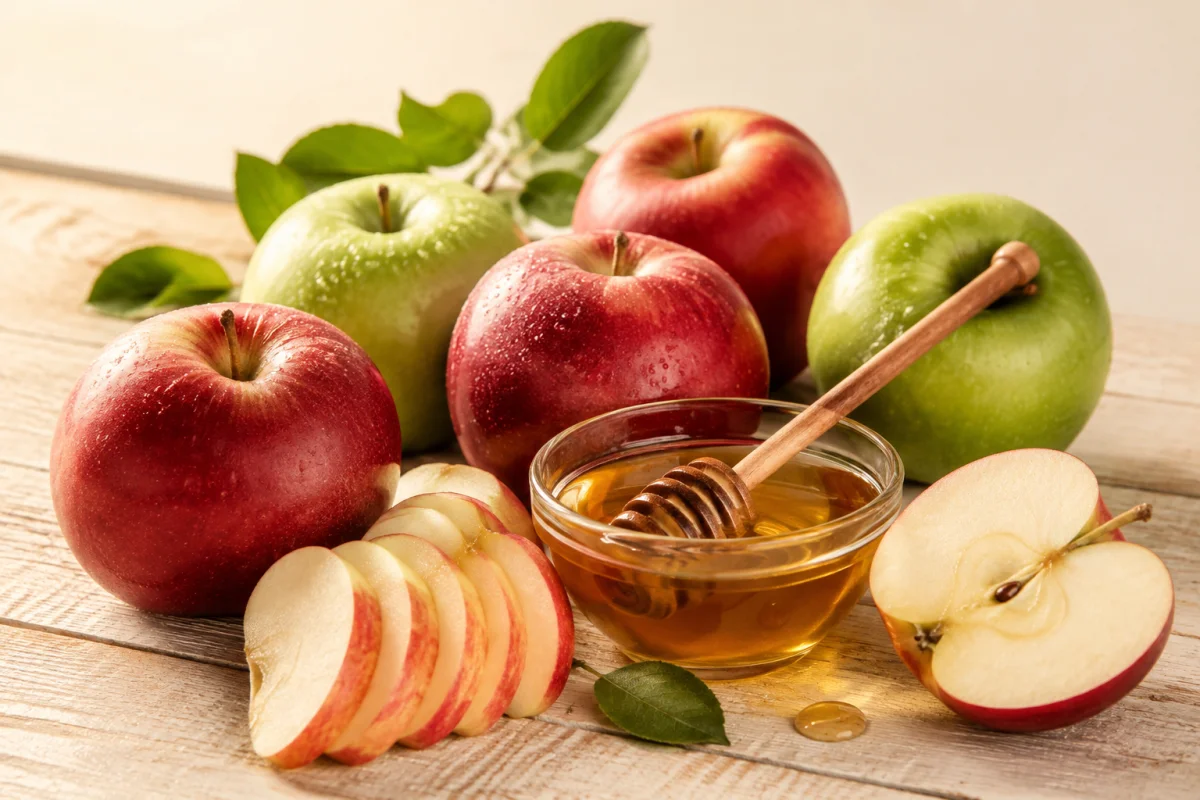
Apples dipped in honey express a wish for a good, sweet year at Rosh Hashanah, the Jewish New Year. The sweetness is a symbol of hope, not a prediction of what the year will bring.
When are apples and honey eaten?
Chabad describes the apple-and-honey custom near the beginning of the first evening meal, alongside the holiday blessings. Its guide also describes challah dipped in honey. Follow your host’s or community’s practice for the meal and its blessings.
Why an apple, rather than any sweet food?
Sweetness is the familiar explanation, but Jewish sources also give the apple its own associations. Yehuda Shurpin’s Chabad article explores several interpretations, including the apple orchard and blessings. There is more than one layer to this small ritual.
Three questions for a shared table
Our conversation idea: What made the past year sweeter? Who would you like to thank? What small kindness would you like to carry into the new year? Let each person choose one question; listening matters more than giving a perfect answer.
Bring it to your table
Set out a simple plate of apple slices and a small bowl of honey. If you are a guest, ask your host how their family marks the moment. Our table prompts are an invitation to conversation, not a replacement for the holiday ritual.
What would make the coming year sweeter for someone else?
Cultural source: Chabad: apples and honey · Chabad: the holiday meal.